
China, the West, and the art of external leverage in Africa
– These days, we often hear about digital payments and digital currencies. China is certainly one of the most advanced economies in terms of digital payments and has very recently developed one of the most advanced financial infrastructures for the implementation of a central bank digital currency. It is often said that in China you no longer use cash and that you can easily get lost if you go there without an app to pay for anything you need to buy. This is partly true. There are shops where you can place orders and pay only through a digital payment app on your mobile phone. However, you can still see people using cash; for example, to buy a newspaper from a street newsstand. And if you venture into one of those small, family-run restaurants and ask for a 30-yuan meal, you can easily pay in cash. They will certainly not disdain your 100-yuan banknote and will readily give you change. Despite the cashless narrative, China still runs its economy on cash more than one might expect. The general rule, however, is that payments are made ideally using a mobile app.
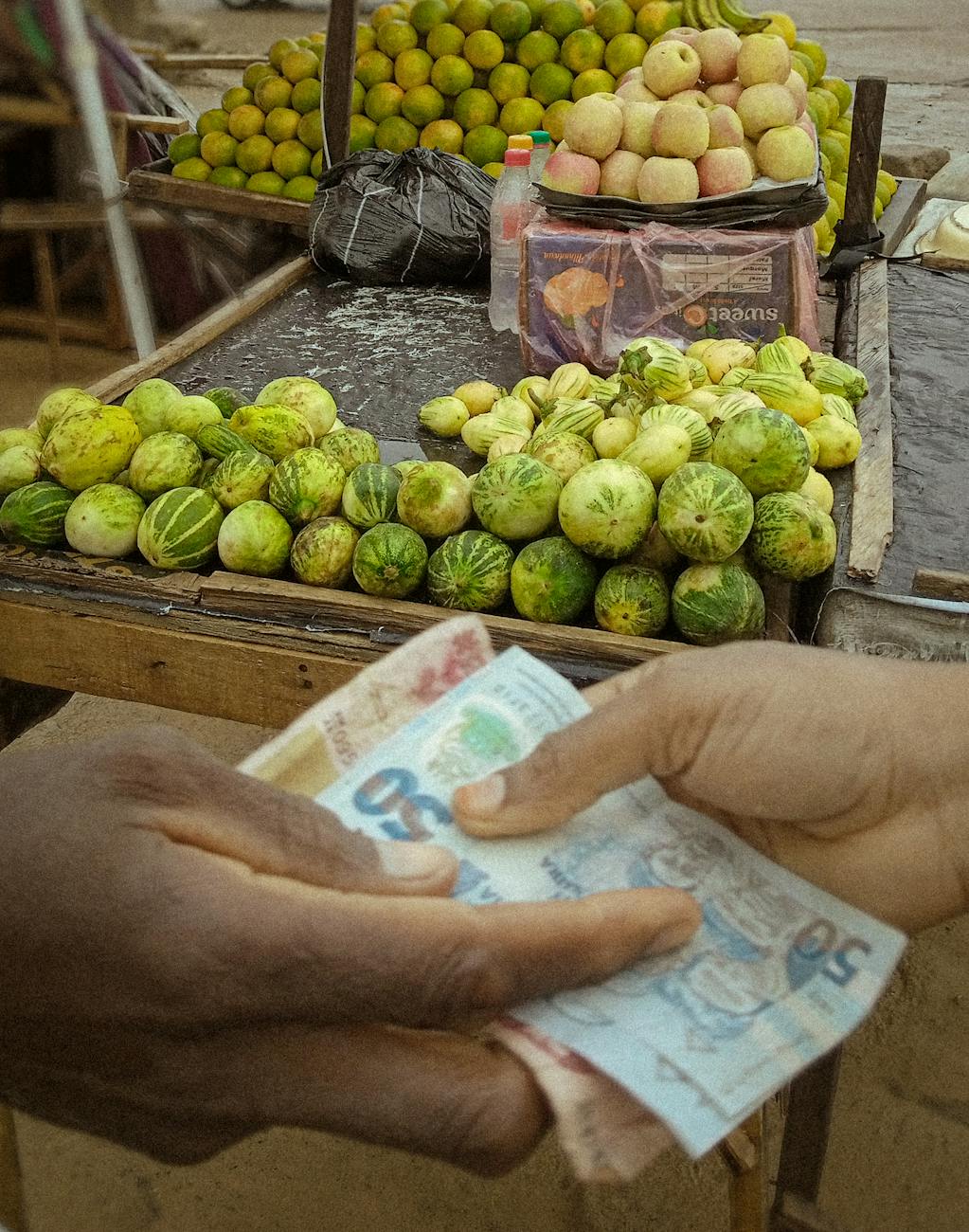
This cannot be said for many countries around the world. European economies, for instance, lag behind. Most African countries are in a similar if not worst situation. Recently, however, this situation has begun to change in Africa. Cheap mobile phones are flooding many African countries; not all of them, and not all at the same speed, but the change is happening. Often, these phones do not have touchscreens; they are basic devices that allow users to make calls and send SMS messages. Thanks to new fintech solutions, people can make payments through SMS-like messaging networks. This simple yet revolutionary practice has changed the lives of millions. People can sell their products at street markets without the risk of being robbed. This practice has increased safety in many African cities, especially for young women and mothers. Both Chinese and European companies, as well as multilateral organizations, have contributed to making this happen. The European Investment Bank is one of the most important European drivers of this change.
The result is less cash, more digital payments, and greater safety. This contributes to the positive narrative surrounding digital money and to a revolution that has only just begun. If we dig a little deeper into this story, we find that Chinese companies have contributed the most, because they started doing what Europeans were unable to do for centuries, or did only to a very limited extent: building infrastructures in Africa. Telecommunications infrastructure is one of the developments that has transformed African societies, perhaps alongside sewer systems in many cities. It has long been said that China does not ask for domestic political transformations when striking a deal but instead builds infrastructure. China’s goal is to access raw materials, precious metals, and hydrocarbons. This approach has made China more respected than Western counterparts in the eyes of many African interlocutors. However, by building the infrastructure that later enabled the gradual move toward a cashless economy in many African states, China achieved much more, something that often remains in the shadows and is rarely discussed. China challenged the power of cash.
To understand how deeply China’s challenge to the West in Africa runs, we must take a step back. African countries, as underdeveloped economies, do not have central banks or mints capable of printing modern banknotes. There is no African country that does not outsource the production of cash to specialized European or American companies. This is true for most countries worldwide, well beyond Africa, but Africa remains the least advanced continent in this regard. A group of European companies, often combining European expertise with US ownership, as is increasingly the case today, holds a quasi-monopoly over the business of printing banknotes for the central banks of most countries around the world. Their services require the use of highly advanced lithography machinery, as well as special papers and inks produced exclusively for this purpose. Their expertise is rare, their identities largely unknown to the public, and their know-how is strongly protected to prevent others from replicating their results and counterfeiting banknotes. Relying on these companies is, for many countries, a matter of national security. Or at least it seems to be at first sight.
Once orders are ready, the product is shipped in escorted convoys. If a convoy fails to reach its destination, the consequences can be disastrous: the economy may be left without cash. In cash-based systems, the absence of physical currency is deeply destabilizing. Bank counters and ATMs cannot distribute cash; people cannot withdraw money or pay for food, medicine, gasoline, and other necessities. It is easy to see that if one of these European companies supplying African economies fails to fulfil its orders, the implications extend far beyond a deteriorating relationship between a producer and a client or a commercial dispute. Such a failure risks provoking social unrest. In other words, outsourcing the production of cash represents a potential weapon against the very government that depends on it. Only once in history has it been claimed that this weapon was used to destabilize an African regime: Gaddafi’s Libya in 2011.
We do not wish to suggest that the weaponization of cash has been used on other occasions. But let us consider the issue from a different perspective. Every time a coup d’état has been staged, it has been supported by the delivery of cash from Europe. This suggests that cash is perceived as neutral and anonymous; much like finance itself. That is the prevailing idea: money does not look politics in the eye. People simply need to consume to survive. Yet the underlying threat remains. African countries have a gun pointed at their heads. It is not their debt; it is their cash. And we must repeat it: this is not only about Africa. In recent upheavals, in Kyiv in 2014 and in Tehran in recent days, people were unable to access their money. Banks and ATMs were shut down. Again, we do not suggest that the weapon of cash was used in these cases, but the question naturally arises: when did the shortage of cash begin? However, to be frank, we do not even know who produces and delivers cash in / to these two countries.
However, it is understandable that people develop a deep sense of injustice when they are unable to access their money. The money they have spent so much time and energy earning. A primordial force erupts when this kind of injustice is felt. Carlo Levi, in his account of the strikes by sulphur miners in early 1950s Sicily, recounts how people began to fight, risking their lives, when the mine owner refused to pay those who had stopped working to retrieve the body of a comrade who had died under a collapse in the mine. The owner also refused to pay the widow the miner’s final hours wages, the day he died. An ancestral sense of injustice transformed the miners into a fierce collective force, condemning the landlord’s unacceptable behaviour. The psychology of money remains deeply embedded in the intimacy of human relationships and social life; for this reason, money is fundamentally political. Far from being neutral. Digital cash is poised to transform the relationship between humans and money. It will alter the nature of this relationship because money will become even less understood than it is today, caught in the maze of the digital. But that is another story. Here, we are interested in how the digital is changing the long-standing condition of dependency endured by African countries.
The lack of full monetary autonomy in African countries is well known. Macroeconomic governance depends heavily on the U.S. dollar. Everyday economic life, by contrast, depends largely on the management of physical cash and its value, which in turn is linked to the performance of the U.S. dollar, since in most cases local currencies are hard pegged to the American currency according to International Monetary Fund classifications. Managing the quantity of physical cash entails increasing the volume of currency in circulation, which is progressively and unevenly accumulated across the economy and therefore withdrawn from immediate use, while a portion disappears into informal or black markets. As a result, the effective supply of cash remains constant. In general, the growth rate of banknote issuance in African countries is significantly higher than in European economies. For example, in 2024 the stock of banknotes grew by 14 percent in Uganda, whereas the growth rate in the European Union was between 2 and 3 percent.
Despite the ongoing digitalization of everyday financial spaces, the use of cash continues to expand, and projections for the coming years suggest that banknote-printing companies will receive an increasing number of orders. While Europe, and Germany in particular, is experiencing recession, the rest of the world is expected to grow, especially developing economies. In these contexts, demand for cash will materialize more quickly and more directly than the digitalization of everyday payment systems. This dynamic will sustain their vulnerability. It also helps explain why many countries are seeking to acquire domestic banknote-production capacity, often with the assistance of European firms. In short, the era of the geopolitical leverage of cash has not ended but has entered a phase of transformation. The factor that disrupted the long-standing equilibrium of Western powers’ external control over the production of physical currency, however, has been China.
It is difficult to assess the degree of strategic intent behind China’s actions in this domain. In practice, however, its decision to support the development of telecommunications infrastructures in African countries has produced precisely this outcome: the creation of the foundations for the digitalization of payment systems. In the short term, this has tangibly and visibly simplified everyday economic life. Over a longer time horizon, however, it is contributing to a form of decolonization, an emancipation from Western postcolonial constraints, through infrastructure provision and the production and distribution of low-cost mobile phones. At first glance, these arrangements do not appear to generate any immediate form of geopolitical leverage.
Yet another dimension of this emerging landscape warrants attention: data storage and data governance. Within these new infrastructures lie vulnerabilities analogous to those of the past. It is therefore unsurprising that geoeconomic competition is emerging in this domain and that it will likely translate into new forms of geopolitical leverage. What is unfolding, then, is a shift from the vulnerability associated with physical cash toward a digital dimension of external exposure capable of constraining many African economies.
This dimension of the Financial Silk Road, which overlaps and intertwines with the Digital Silk Road, concerns an aspect, namely physical cash and its production, that is less visible and less immediately intuitive than those typically invoked in discussions of finance, such as investment flows, financial instruments, stock exchanges, currencies, equities, and bonds. Nevertheless, it is clearly part of the broader game within which the Financial Silk Road is embedded.



 The Financial Silk Road
Leave a reply to Geopolitica del contante e dei pagamenti digitali – TransatlanticoTransatlantico Cancel reply